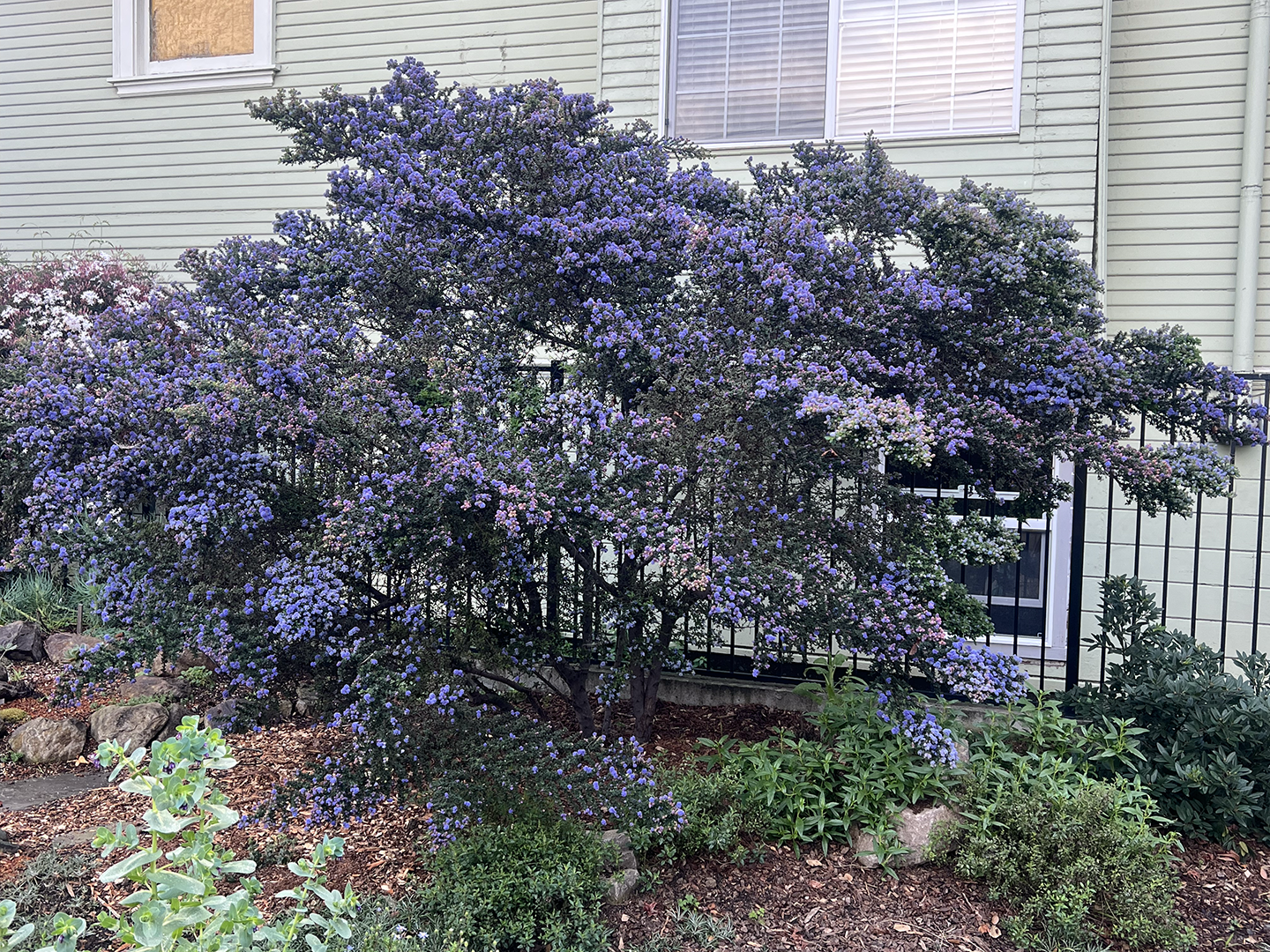
Ceanothus ‘Julia Phelps’
Pruning
I work on most species of trees and shrubs that are under 18’ tall. I love the chance to set a young tree up for success, as it can make a huge difference to establish good structure when the pruning cuts are small and the youthful tree heals quickly. I love pruning California native shrubs and trees in a way that suits a more naturalistic design. I love helping clients’ fruit trees become more healthy and productive. Responsible pruning is not a “one and done” relationship, but rather redirects energy through the tree over several years. The examples here don’t represent the only species of trees I prune; they represent the times when I remembered to document my work.
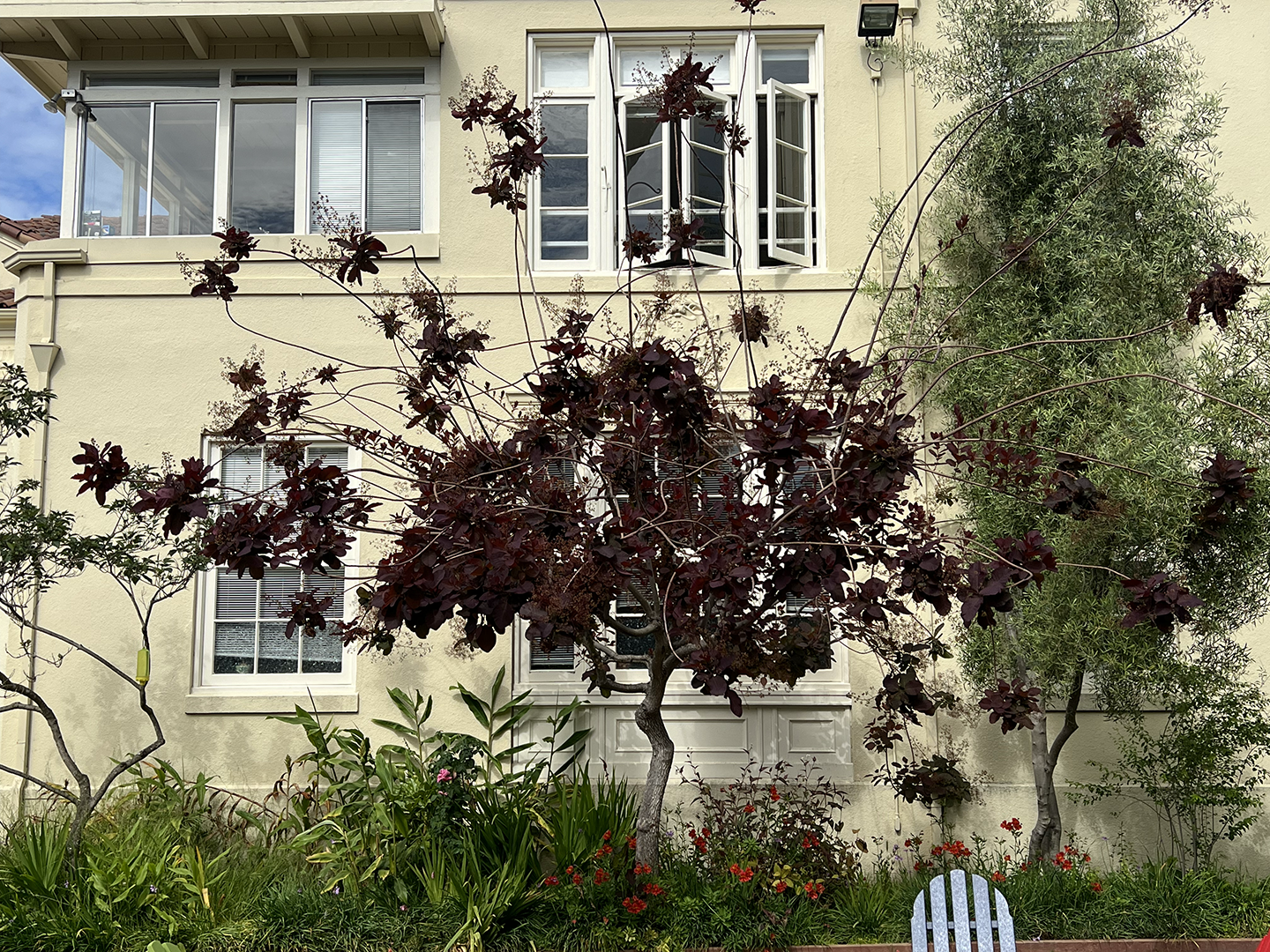
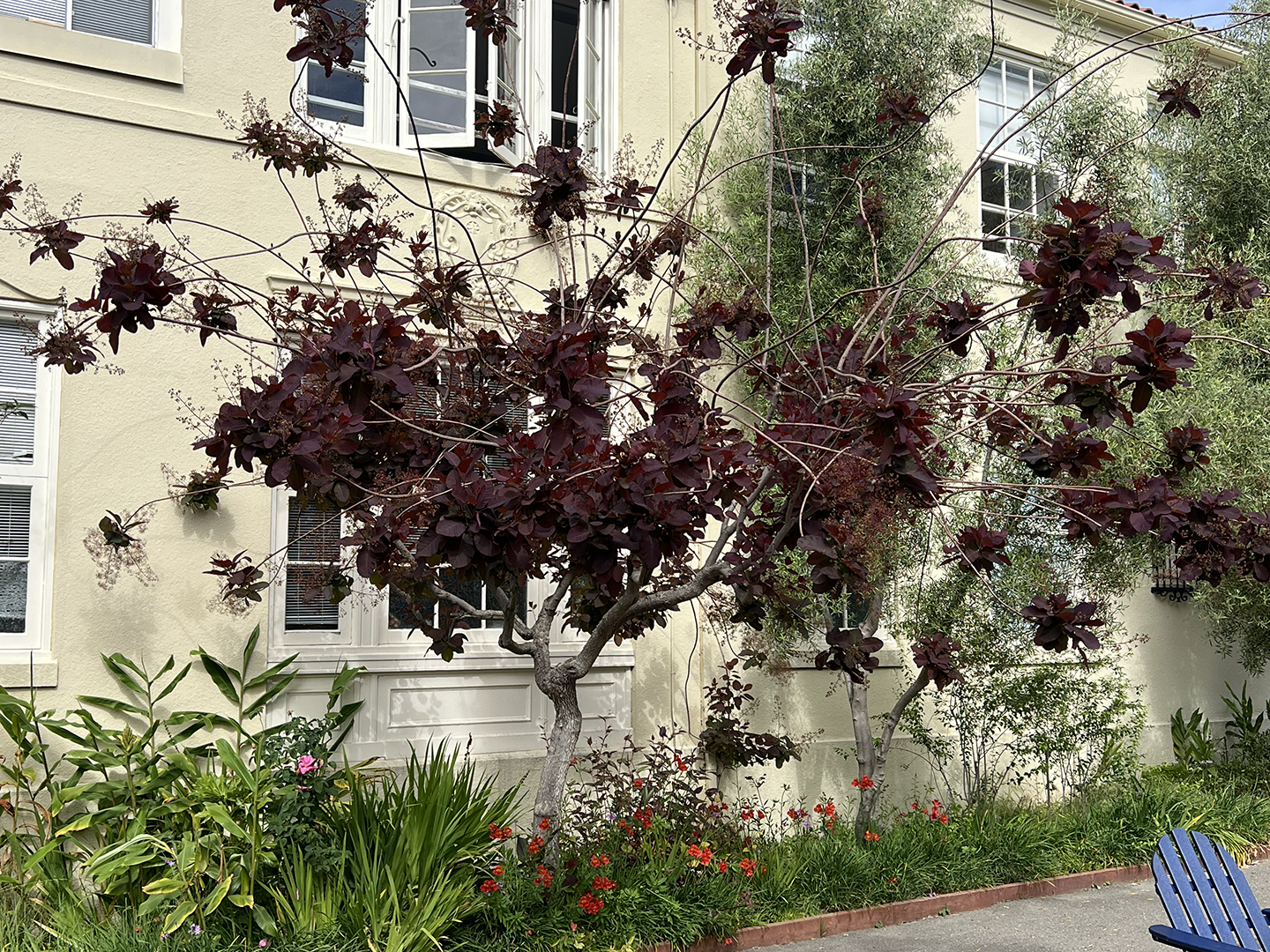
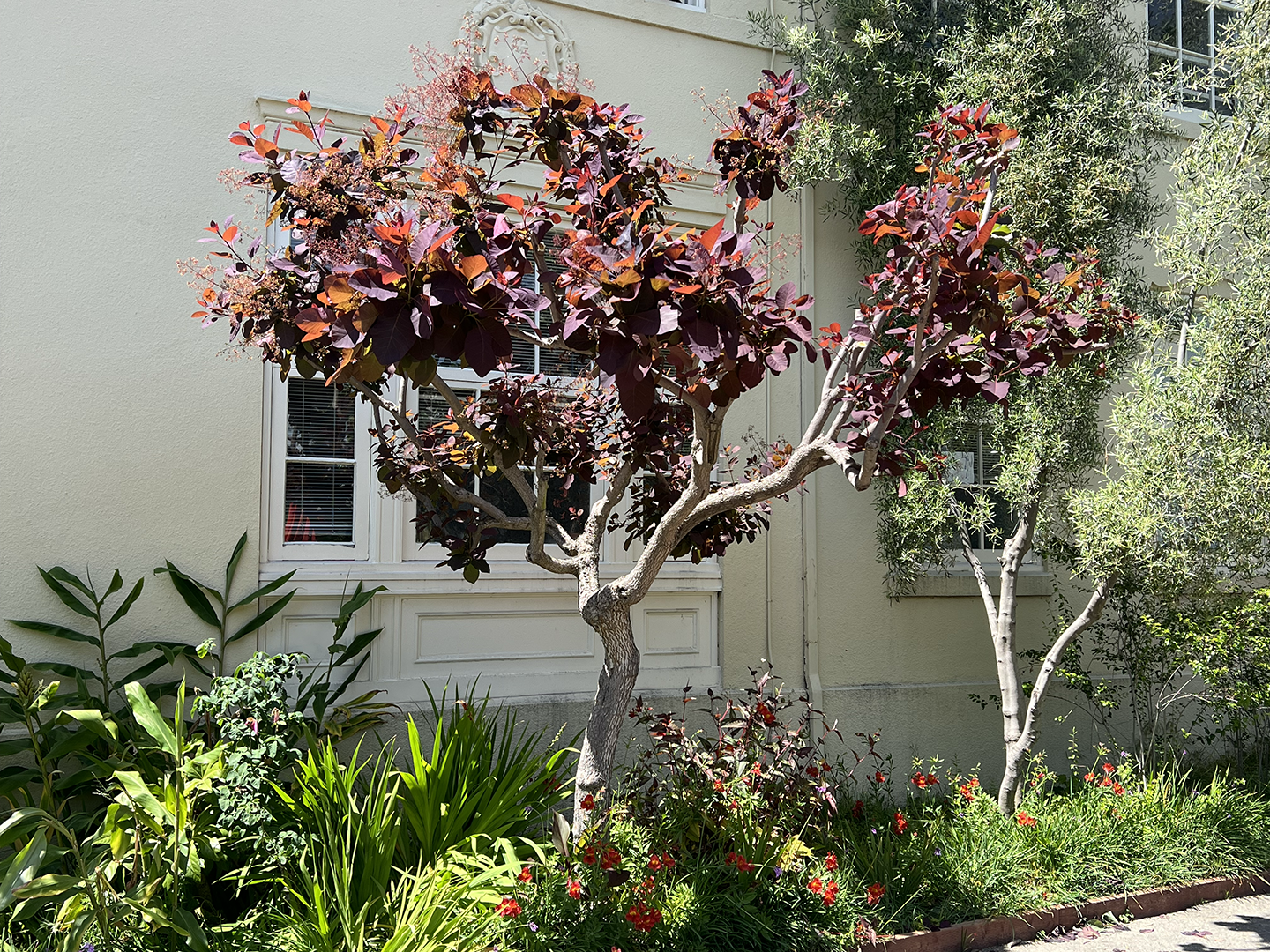
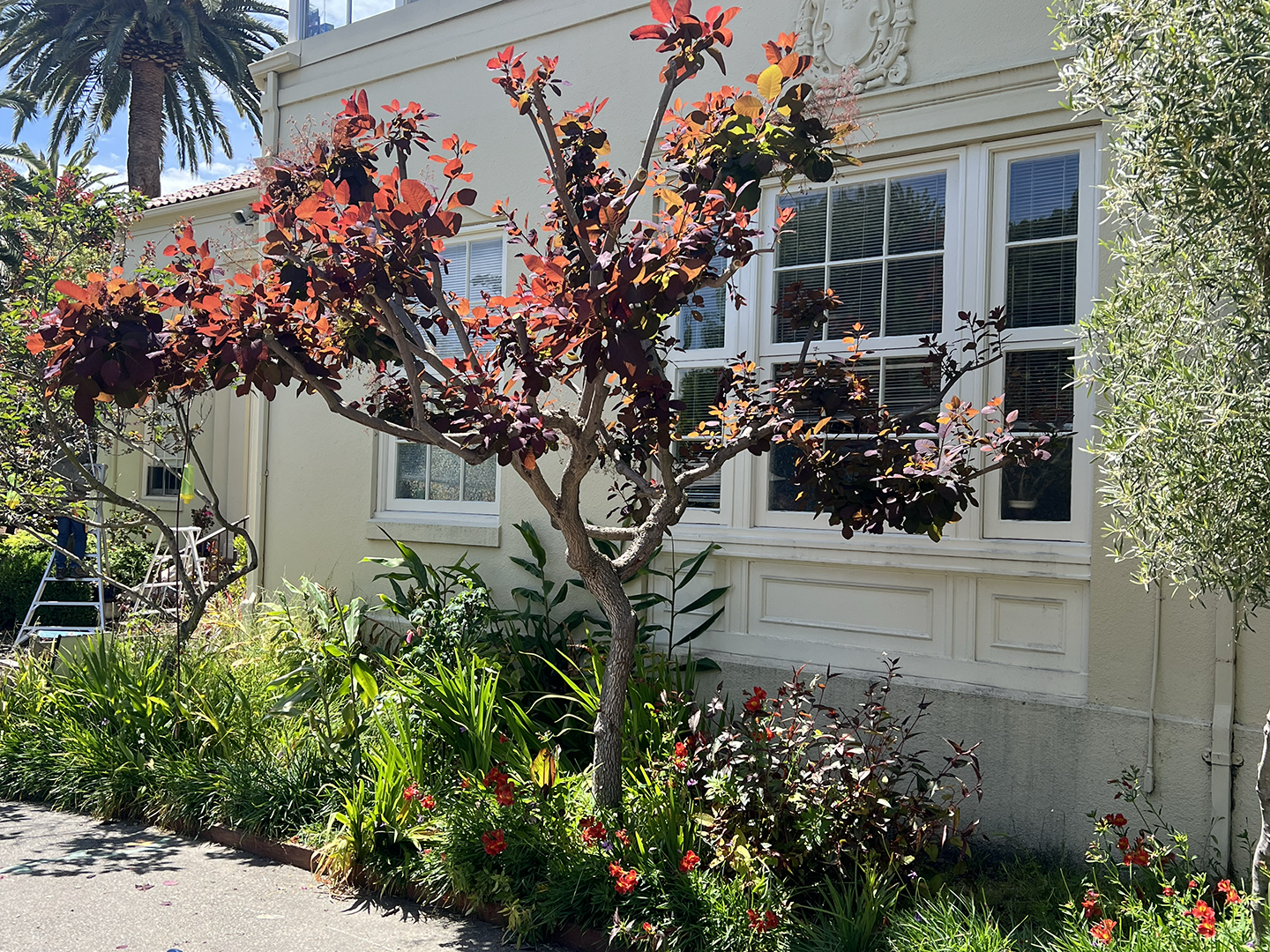
The tree form of Cotinus grows quite large when given the chance. Its location between a building and a pathway made it necessary to keep the tree smaller. (Before above, After below)
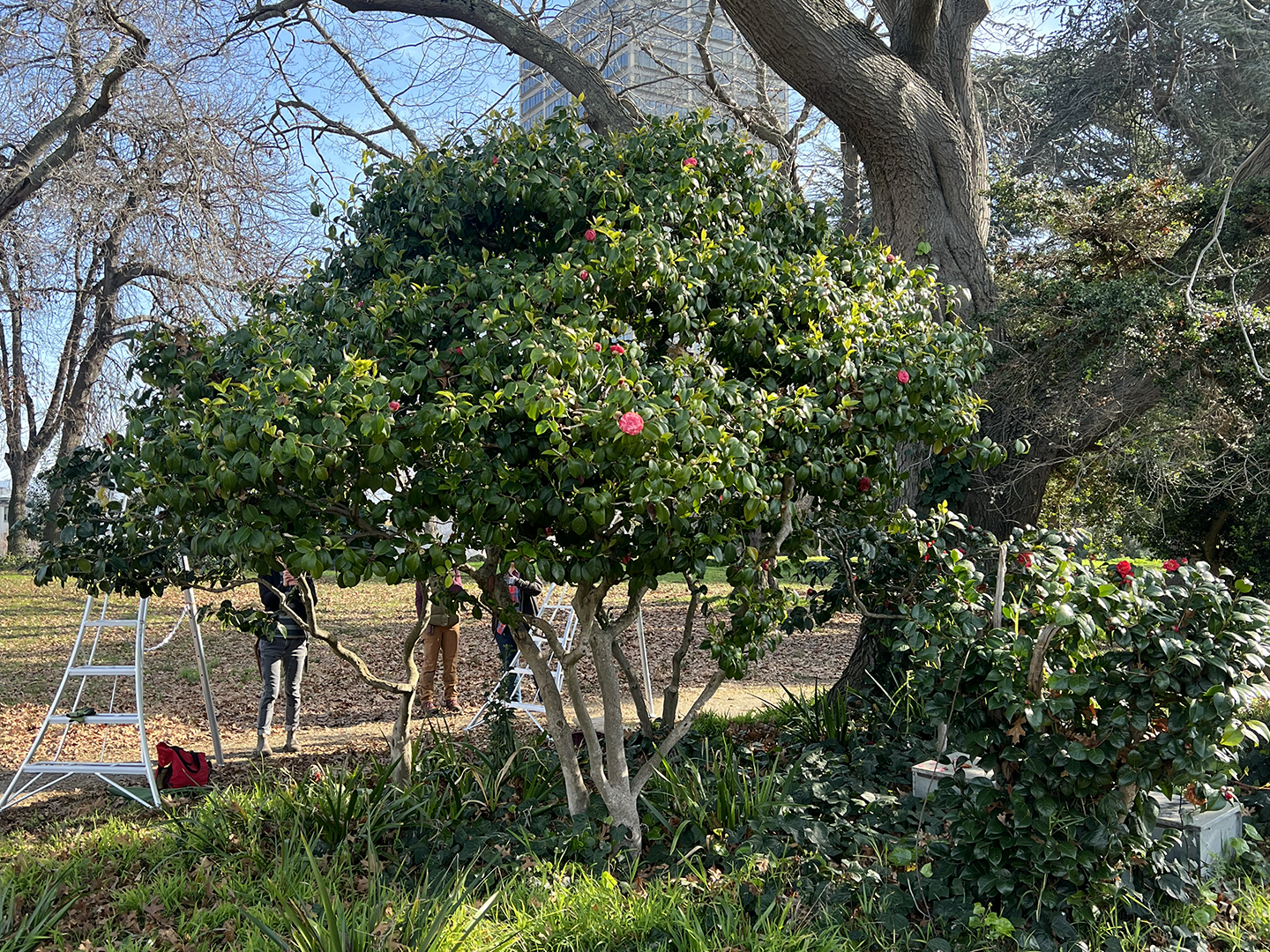
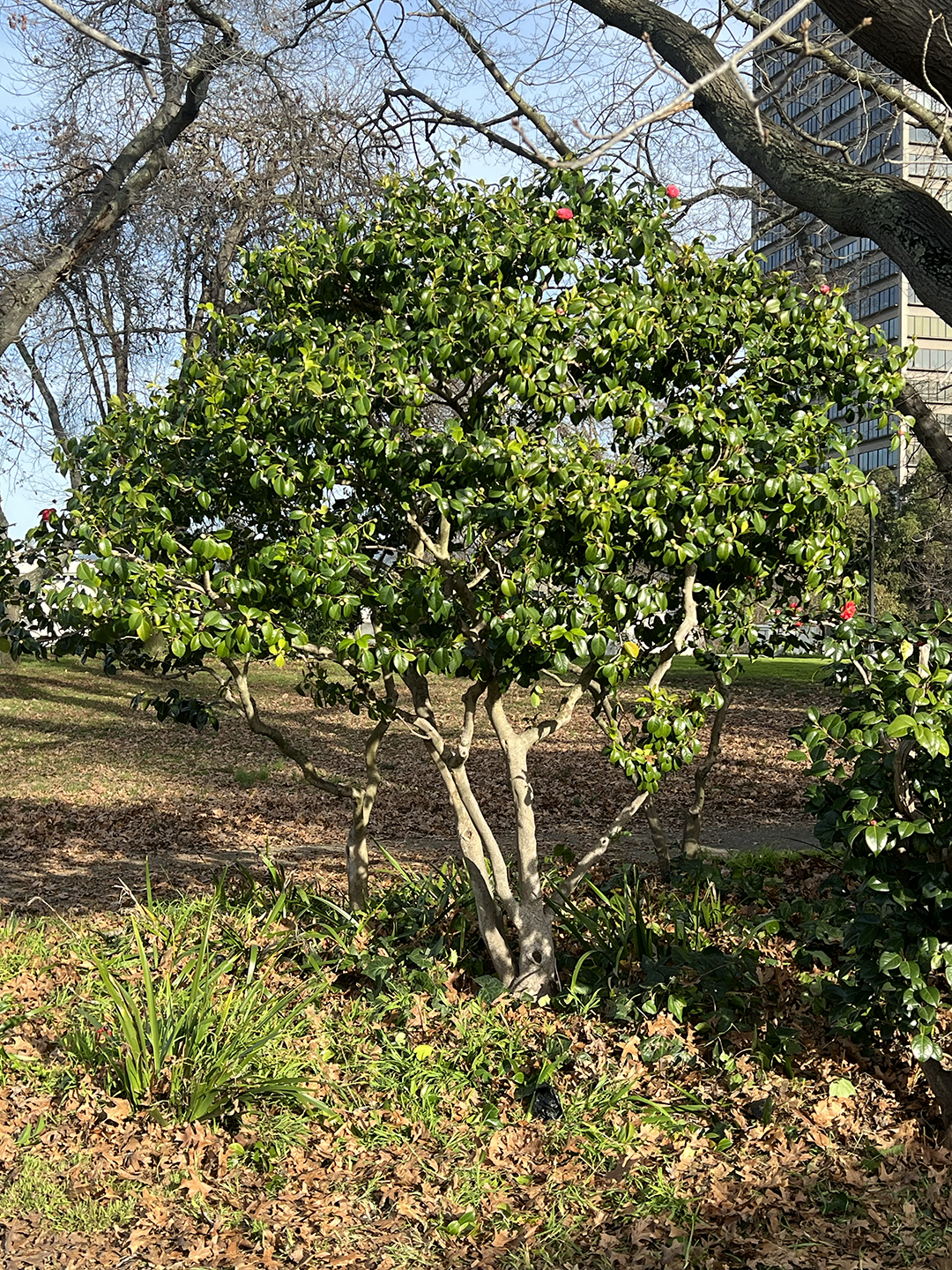
This Camelia (Before, Left) has a dense crown that ends abruptly in a hard line where the foliage stops and the trunks are visible. I opened up some of the dense areas, so it’s possible to follow the line of the trunks up into the canopy, and to see through it in some places (After, right). This lets light into the crown and improves air flow. I softened the hard edge where the foliage meets the bare trunks.
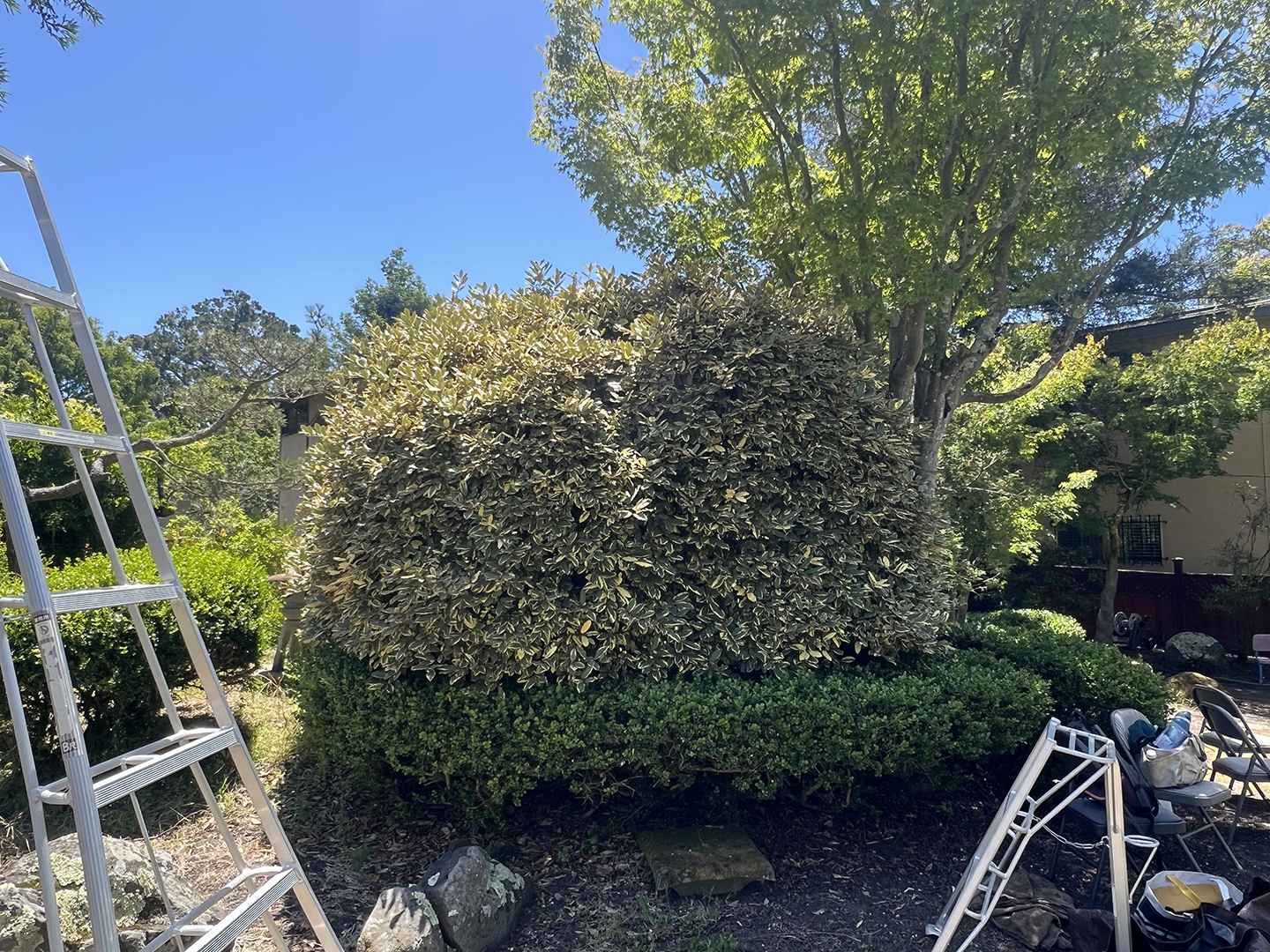
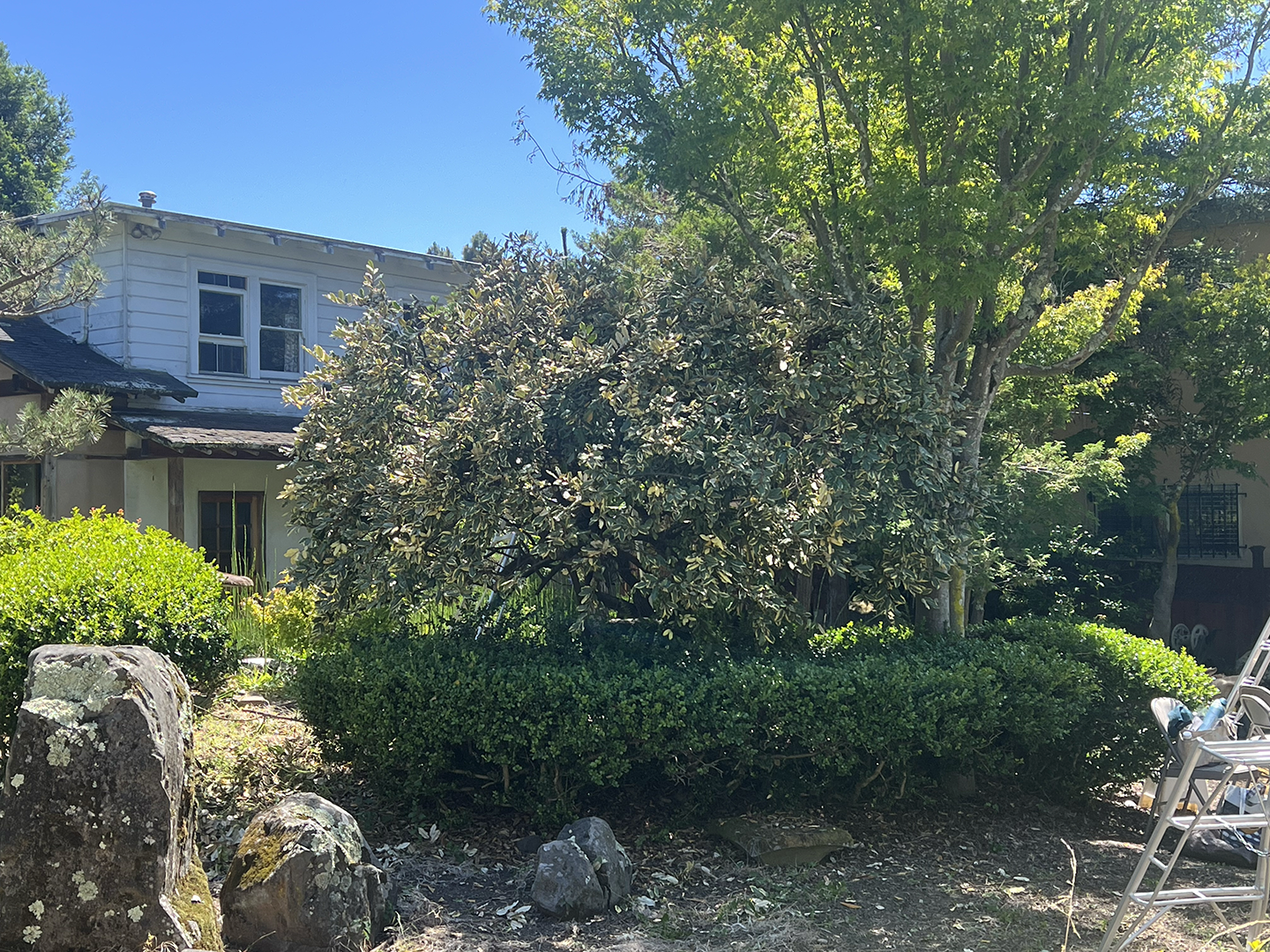
This Eleagnus (Before, Left) had been hedged repeatedly, creating a dense shell of foliage on the periphery and very little light or foliage in the interior. A pruning partner and I lifted it off of the boxwood (below it) and away from the Japanese Maple to its right. We began the process of removing “knuckles”- my term for the dense woody branch ends caused by hedging. The results of this first pruning give it a more natural, less “gumdrop” look, and will let air and light into the interior, which will stimulate foliage growth in the interior. Another couple of prunings and it will be Elegant Eleagnus.
Quisque iaculis facilisis lacinia. Mauris euismod pellentesque tellus sit amet mollis.